Artificial intelligence is becoming a competitive tool for lenders seeking to grow small-business portfolios, improve risk selection, and reduce the cost of fraud and manual underwriting. The opportunity is especially significant in segments where traditional credit models may overlook viable businesses because they rely too heavily on limited financial histories, collateral, or conventional borrowing patterns.
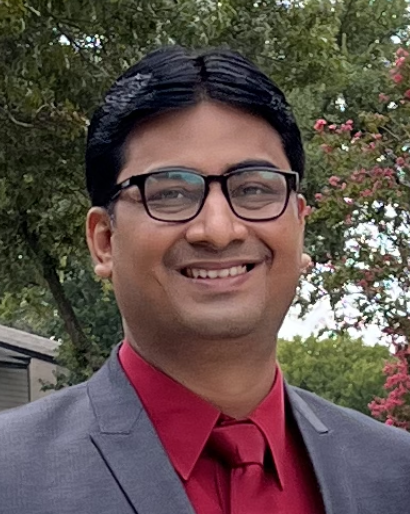
Saugat Nayak is a data science and risk analytics specialist with more than 15 years of experience across financial technology, telecommunications, and consulting. His work focuses on machine learning-driven credit risk, real-time fraud detection, behavioral analytics, and AI decision systems deployed in production environments. He has helped examine how alternative data and dynamic behavioral signals can give lenders a more current view of business performance while supporting faster, more consistent decisions.
In this interview, Nayak discusses how financial institutions can use AI to identify creditworthy small businesses that legacy models may miss, reduce false positives in fraud detection, and move risk models successfully from research into day-to-day operations. He also explains why data quality, explainability, model monitoring, and cross-functional adoption are essential for institutions that want to expand lending responsibly while improving efficiency and capturing underserved market opportunities.
1. Traditional credit scoring has been the foundation of lending for decades. Why do you
believe these models often fall short when evaluating small and minority-owned businesses?
Traditional credit scoring was designed in a different era, for a different borrower profile. It
relies heavily on credit history, debt-to-income ratios, and collateral, basically metrics that favor
established businesses with long financial track records. The problem is that many small and
minority-owned businesses simply don’t fit that mold, not because they’re poor credit risks, but
because they’ve historically operated outside the systems that generate those signals.
A business owner who bootstrapped their operation, reinvested cash flow instead of taking on
debt, or built their customer base through community networks won’t show up well in a FICO-
based model. That doesn’t mean they’re not creditworthy but It means the model isn’t asking
the right questions.
2. You’ve spent much of your career developing AI-powered risk models. How are machine
learning and behavioral analytics changing the way lenders assess creditworthiness?
The shift I’ve seen is from static snapshots to dynamic patterns. Traditional models look at
where a borrower has been. Machine learning lets us look at how they behave and that
behavioral signal is often far more predictive than a credit score.
In my work building risk models for SME lending, I’ve seen how variables like cash flow
consistency, transaction velocity, seasonal patterns, and even supplier payment behavior can
tell a much richer story about a business’s health than a balance sheet alone. Behavioral
analytics adds another layer and it captures how borrowers interact with financial products
over time, flagging anomalies that indicate risk or, equally important, patterns that indicate
reliability that traditional scoring would miss entirely.
What excites me most is that these models get better with data. The more diverse the
borrower population I train on, the more nuanced and fairer the model becomes.
3. Many small businesses struggle to access financing despite having healthy operations. How
can alternative data help create a more complete picture of a borrower’s financial health?
Alternative data fills in the gaps that traditional underwriting leaves blank. When I work on
credit risk models for small business lending, I look at signals like point-of-sale transaction data,
payroll consistency, inventory turnover, and even online review sentiment as proxies for
business health. These aren’t exotic data sources but they’re traces that every operating
business leaves behind naturally.
For a restaurant, consistent weekend revenue spikes and steady supplier payments tell me far
more about viability than a two-year-old tax return. The challenge is building models that can
synthesize these signals responsibly, making sure the data is relevant, not just correlated.
4. AI has the potential to improve lending decisions, but it also raises concerns about fairness
and bias. What steps should financial institutions take to ensure these systems remain
transparent and equitable?
This is something I think about deeply in my work, especially given the populations these
models most directly affect. The first step is acknowledging that bias in AI doesn’t appear out of
nowhere but it’s inherited from biased historical data. If my training data reflects decades of
discriminatory lending, my model will learn those patterns unless I actively intervene.
Practically, that means building fairness constraints directly into the model development
process, not treating them as an afterthought. It means testing model outputs across
demographic segments before deployment, not just overall accuracy metrics. And it means
investing in explainability, lenders need to be able to tell a borrower why they were declined in
plain language, which is both a regulatory expectation and a basic matter of fairness.
Explainable AI isn’t just a compliance checkbox; it’s what makes these systems trustworthy
enough to actually expand access rather than entrench exclusion.
5. Fraud prevention has become increasingly important as financial services continue to
digitize. How can AI help organizations detect fraud while maintaining a positive customer
experience?
The tension between fraud detection and customer experience is real, and it’s one I’ve worked
on directly. The traditional approach, flagging anything that looks unusual and putting it
through a manual review queue creates friction that legitimate customers feel acutely, while
sophisticated fraudsters find workarounds.
What AI enables is much more precise targeting. By building behavioral baseline profiles for
individual users, models can distinguish between a customer who is traveling and making
unusual purchases versus a fraudster who has compromised an account. That precision means
fewer false positives, which means fewer good customers getting blocked at the worst possible
moment. The key is layering real-time scoring with contextual signals like device fingerprinting,
geolocation consistency, session behavior, so the system is making decisions based on a full
picture, not a single anomaly.
6. As financial institutions adopt more sophisticated AI systems, what are some of the biggest
implementation challenges you’ve seen when moving these models from research into real-
world production environments?
The gap between a model that works in a notebook and a model that works in production is
where most AI initiatives quietly fail. I’ve seen this pattern repeatedly. In research, data is clean,
latency doesn’t matter, and edge cases can be manually reviewed. In production, none of those
luxuries exist.
The challenges I see most often are data pipeline fragility, model drift, and organizational
readiness. A model trained on last year’s data starts degrading the moment the market shifts
and in SME lending, economic conditions can shift fast. Building monitoring systems that catch
drift early, and retraining pipelines that can respond quickly, is as important as the model itself.
The other challenge is people getting underwriters, compliance teams, and product managers
to actually trust and act on model outputs requires investment in communication and
education that most ML teams underestimate.
7. Looking ahead, How do you see AI reshaping access to capital for entrepreneurs and
underserved communities over the next five to ten years?
I’m genuinely optimistic about this, with some important caveats. The next decade will see
alternative data and real-time underwriting become standard practice rather than competitive
differentiators. That structural shift will meaningfully expand the pool of bankable small
businesses, particularly in communities that traditional lending has chronically underserved.
What gives me confidence is that the economic incentive aligns with the social one. There are
hundreds of billions of dollars in untapped lending opportunity in the SME segment. Lenders
who build models sophisticated enough to identify creditworthy borrowers that legacy scoring
misses aren’t just doing good. They’re accessing a market their competitors are leaving behind.
That alignment of profit and purpose tends to drive real, sustained change.
8. What advice would you give financial institutions that want to leverage AI not only to
improve operational efficiency but also to expand responsible lending and better serve small
business owners?
Start with the problem you’re actually trying to solve, not the technology. I’ve seen institutions
invest heavily in AI infrastructure before they’ve clearly defined what success looks like for their
specific borrower population and risk appetite. That leads to models that are technically
impressive but operationally irrelevant.
The institutions doing this well are the ones treating AI as a continuous capability, not a one-
time project. They invest in data quality upstream, they monitor model performance
downstream, and they build cross-functional teams where data scientists work alongside credit
officers and compliance leads from day one. Responsible lending isn’t a constraint on AI, rather
it’s a design principle. The best models I’ve built have been the ones where fairness,
explainability, and accuracy were treated as equally important from the very first line of code.
The post Saugat Nayak on How AI Is Helping Lenders Find Creditworthy Businesses Traditional Models Miss appeared first on SiteProNews.






0 Commentaires